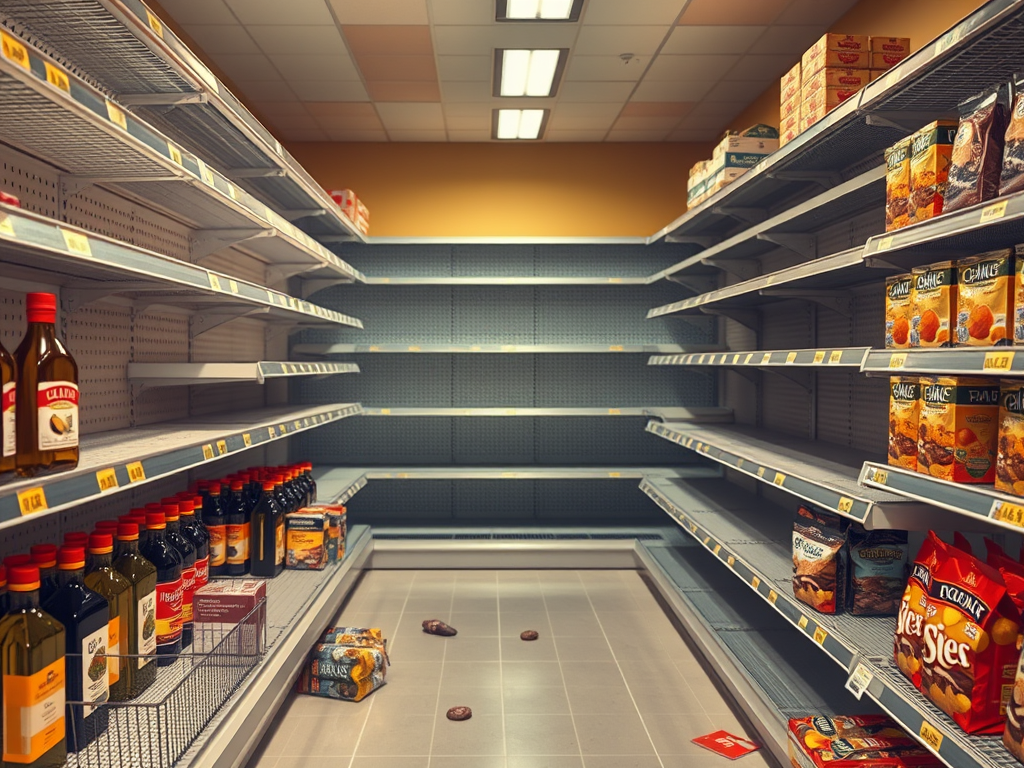
If you’ve been noticing higher prices or empty shelves at your local grocery store, you’re not imagining things. Several key grocery items are facing shortages due to climate change, supply chain disruptions, and other economic factors. Here’s a look at 12 items that could be tough to find before the end of March 2025—plus some smart alternatives to help you adjust.
1. Olive Oil
Why the Shortage?
Severe droughts in Spain, Italy, and Greece—where most of the world’s olive oil is produced—have caused a major drop in production, leading to skyrocketing prices and supply shortages.
Alternatives:
- Avocado oil (similar healthy fats and cooking versatility)
- Grapeseed oil (neutral flavor, good for high-heat cooking)
- Butter or ghee (works for sautéing and roasting)
2. Chocolate
Why the Shortage?
Cocoa prices have reached record highs due to poor harvests in West Africa, where the majority of the world’s cocoa is grown. Climate issues, plant diseases, and supply chain disruptions are all contributing factors.
Alternatives:
- Carob (naturally sweet, caffeine-free alternative to cocoa)
- Cocoa-free chocolate substitutes (some brands use roasted grains or nuts to mimic chocolate flavor)
- White chocolate (made from cocoa butter, not cocoa solids, though still affected by price increases)
3. Citrus Fruits (Oranges, Lemons, Limes, Grapefruits)
Why the Shortage?
A devastating plant disease called citrus greening is wiping out orange groves in Florida and Brazil. Combined with extreme weather, citrus crops are struggling.
Alternatives:
- Frozen citrus juice or zest (stock up before supplies shrink)
- Citric acid powder (can replace lemon juice in recipes)
- Vinegar (for acidity in cooking when citrus is unavailable)
4. Coffee
Why the Shortage?
Rising global temperatures and unpredictable weather are making it harder to grow coffee beans, leading to lower yields and potential shortages.
Alternatives:
- Chicory root coffee (a naturally caffeine-free coffee substitute)
- Mushroom coffee (earthy, lower in caffeine, with health benefits)
- Yerba mate or black tea (for a strong caffeine boost)
5. Seafood (Salmon, Shrimp, Crab, Lobster)
Why the Shortage?
Overfishing, marine diseases, and climate change are depleting wild seafood stocks. Farmed seafood is also struggling due to supply chain issues and feed shortages.
Alternatives:
- Frozen or canned seafood (often more available than fresh)
- Sustainable fish like tilapia or catfish
- Plant-based seafood alternatives (made from konjac, soy, or pea protein)
6. Rice
Why the Shortage?
Extreme weather in major rice-producing countries like India and Thailand has disrupted production, and some governments are limiting exports to control local food supply.
Alternatives:
- Quinoa (high in protein and fiber)
- Barley or farro (chewy, nutritious grains)
- Cauliflower rice (low-carb alternative)
7. Fresh Berries
Why the Shortage?
Cold snaps, heatwaves, and unpredictable weather patterns have disrupted berry harvests, leading to lower availability and higher prices.
Alternatives:
- Frozen berries (just as nutritious as fresh)
- Dried berries (great for snacking and baking)
- Berry preserves or jam (longer shelf life)
8. Matcha
Why the Shortage?
Japan’s matcha industry is facing rising production costs and limited harvests, making it harder to import high-quality matcha.
Alternatives:
- Green tea (same antioxidants, just not powdered)
- Spirulina or chlorella powder (for a similar nutrient boost)
- Moringa tea (caffeine-free and packed with vitamins)
9. Specialty Meats (Ribeye, Pork Shoulder, etc.)
Why the Shortage?
Higher feed costs, labor shortages, and transportation issues are making premium meat cuts harder to find and more expensive.
Alternatives:
- Ground meat or stew cuts (cheaper and easier to find)
- Chicken thighs (flavorful and cost-effective)
- Plant-based meat substitutes (like Impossible or Beyond Meat)
10. Chicken Wings
Why the Shortage?
Chicken wings are in high demand during major events like the Super Bowl, NCAA Final Four, and the start of summer grilling season. Supply chain disruptions and increased poultry feed costs are also contributing to shortages.
Alternatives:
- Chicken drumsticks or thighs (similar flavor and easier to find)
- Boneless chicken breast bites (can be prepared like wings)
- Cauliflower wings (a plant-based alternative)
11. Dairy Alternatives (Oat Milk, Plant-Based Yogurts & Cheese)
Why the Shortage?
Oat and nut crops have been affected by extreme weather, making it harder to produce plant-based dairy at scale. Supply chain issues are also slowing production.
Alternatives:
- Almond or soy milk (more stable supply than oat milk)
- Coconut yogurt (a good dairy-free option)
- DIY oat milk (easy to make at home with oats and water)
12. Flour Alternatives (Coconut Flour, Almond Flour, etc.)
Why the Shortage?
Coconut and almond crops have been affected by droughts and supply chain disruptions, leading to a shortage of alternative flours used in gluten-free and low-carb diets.
Alternatives:
- Cassava flour (similar texture and gluten-free)
- Chickpea flour (high in protein and fiber)
- Oat flour (easy to make at home and widely available)
Final Thoughts: Stock Up & Stay Flexible
If any of these foods are part of your regular shopping list, it might be a good idea to stock up now before prices rise even more. Staying open to alternatives can also help you adapt to shortages without sacrificing flavor or nutrition.
What items have you noticed disappearing from shelves? Let us know in the comments!
 DSM Bargain Hunter
Leave a comment